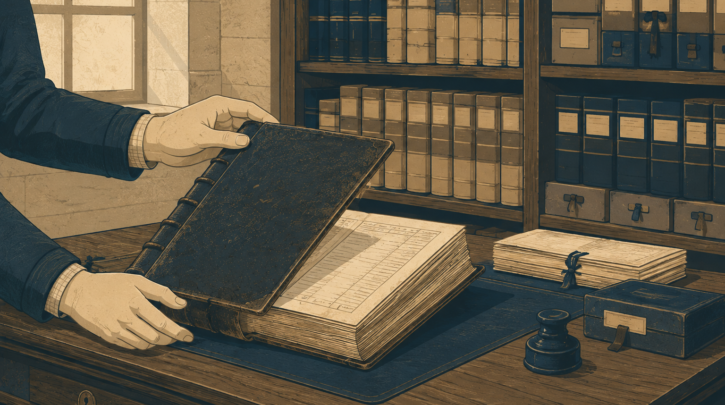

For the dedicated family historian on a heritage trip, the idea of researching in Portuguese archives in person has real romance—holding the original parish register, sitting in a historic archive. With Portugal, though, there is an honest twist worth knowing up front: because so much is already digitised and free—on FamilySearch and through the district archives’ own portals—in-person research is often more about experience and the occasional un-digitised record than about necessity. This guide explains when and how to do it, and how to set your expectations.
First, the honest truth: much is already online
Portugal is well digitised for genealogy. A vast quantity of civil and parish records is available free on FamilySearch, and many district archives have digitised substantial holdings and put them online through their own catalogue systems (such as the widely used DigitArq platform). For most families, the core records you need can be viewed online without ever entering an archive. This is wonderful news—and it means you should not assume you must travel to an archive to break a wall; very often the record is already a few clicks away. Plan your trip around what genuinely benefits from being done in person.
Not sure where to start with your Portuguese ancestry?
Get the Portuguese Genealogy Quick-Start Checklist — a 5-step path to your first real ancestor record, plus the two-surname naming system that trips up almost every beginner.
When in-person research helps
That said, on-site research still has its place, and a few situations genuinely call for it:
- Un-digitised records — some records, especially local, notarial, or more specialised materials, may not be online and survive only in an archive.
- Deeper or specialised sources — notarial records (wills, land deeds, dowries), passport registers, and other documents for research that has gone beyond the vital records.
- The experience itself — for many, seeing original registers and researching in a Portuguese archive is a meaningful part of the journey, even when the same pages are online.
Where the records are kept
Portugal’s records are held in a well-organised system. The district archives (Arquivos Distritais) hold the parish and civil registers for their areas, and are the natural home of most regional genealogical material. The Torre do Tombo (the national archive, ANTT) in Lisbon holds older and national records, and specialised collections—notarial, legal, the Inquisition—valuable for deeper research. And the Azores and Madeira have their own regional archives, essential for island families. Knowing which body holds what you need—and confirming it is not already online—lets you plan an efficient visit.
Archives have their own opening hours, access rules and procedures, and some materials may need to be ordered in advance or consulted only in digitised form. If you plan an in-person visit, contact the archive ahead, confirm what is available on-site versus online, and check requirements—so you do not travel for a record you could have read at home, or arrive to find a document unavailable without notice.
Before planning any archive visit, check whether the record is already online—most are. Start free at FamilySearch via the records hub, and weave any real archive visit into your wider heritage trip.
Making the most of an archive visit
If you do visit an archive, prepare as you would for any research: know exactly what you are looking for, bring your traced line and the gaps you hope to fill, and confirm in advance that the material is held there and not simply online. A little Portuguese, or help from a Portuguese-speaking companion, is valuable in a Portuguese archive. The staff are professional and helpful, and their time—and yours—is best used on the specific, un-digitised or specialised records only the archive holds, rather than on registers you could have viewed free at home.
Hiring help, if you need it
If you hit a wall requiring un-digitised or specialised records and cannot travel, or if old Portuguese handwriting or Latin defeats you, a professional researcher experienced in Portuguese records can help—retrieving documents from a district archive or the Torre do Tombo, reading difficult hands, or pursuing notarial and other records beyond the vital registers. Portugal’s active genealogical community can also point you to resources and help. But for most families, the combination of the free online records, a little skill at reading them, and a heritage trip focused on experience rather than archive-digging is all that is needed—a happy situation that Portugal’s remarkable, largely free digitisation has made possible.
Experience, not obligation
In Portugal, then, the in-person archive visit is best seen as the icing rather than the cake. The online records—free, vast and available now—are what carry most family histories back through the generations, while the archive visit is a chance to see the originals, pursue the specialised sources, and experience the places where Portugal keeps its documentary heritage. Freed from the need to travel for records you can read at home, you can spend your heritage trip where it matters most—in the ancestral village or island—and treat any archive visit as a rewarding complement to the research you have already done, not a burden the digitisation has, thankfully, largely lifted.