
For a great many people with Portuguese ancestry—especially in North America—the heritage trip is not to the mainland at all, but to the Atlantic islands: the Azores or Madeira. These islands are the heartland of the diaspora, the place from which so many families sailed, and visiting them is among the most stirring experiences in Portuguese heritage travel. But an island trip has its own character and planning. This guide explains how to visit your island roots well.
The islands as diaspora heartland
The Azores and Madeira sent emigrants abroad in numbers out of all proportion to their populations, so that for much of the North American Portuguese diaspora, the ancestral home is an island rather than the mainland. Visiting is therefore, for many descendants, a return to the true source of the family—the small island village from which a great-grandparent left for New England, California, Hawaii or Canada. The emigration story makes the islands deeply meaningful to visit, and the strong bonds islanders kept with their diaspora mean returning descendants are often warmly received.
Not sure where to start with your Portuguese ancestry?
Get the Portuguese Genealogy Quick-Start Checklist — a 5-step path to your first real ancestor record, plus the two-surname naming system that trips up almost every beginner.
Identify your island and village first
The essential first step is knowing which island and which village your family came from—not merely “the Azores.” The Azores spread across nine islands in three widely separated groups, each a distinct place with its own communities and its own records, while Madeira is a separate archipelago far to the south. Your trip must be built around the specific island and village, identified through your research, family tradition and the origins named in records abroad. Getting this right is what makes the difference between visiting “the islands” and visiting your island home.
Visiting your island village
Once on your island, the heart of the visit is the same as on the mainland: the village and parish your family came from—the church where they were baptised, the cemetery with the family names, the village and land they knew. Island villages are often small, close-knit and beautifully set, and standing in the specific freguesia your family left, perhaps meeting relatives who never emigrated, is profoundly moving. Prepare as for any village visit: know your family’s place in the records, and reach out to the parish or relatives in advance.
The Holy Ghost festas
Nothing expresses island culture—and the diaspora’s shared identity—more than the Holy Ghost (Espírito Santo) festivals, central to Azorean life and celebrated with great devotion both on the islands and throughout the diaspora. If you can time your visit to experience a Holy Ghost festa in your ancestral island community—with its crowning ceremonies, processions, communal meals and music—you will witness the living heart of the culture your family carried abroad, often the very same festa traditions kept in New England or California. The festivals cluster especially in the summer, a key consideration in timing an island trip.
The island landscapes
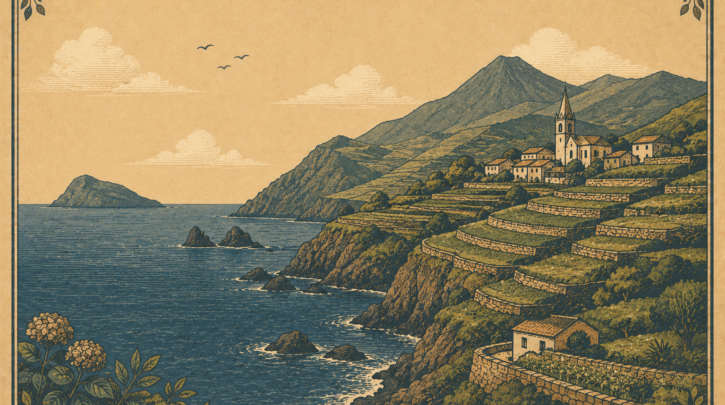
Part of the power of an island heritage trip is the landscape itself. The Azores are volcanic and green, of lakes, craters, hot springs and dramatic coasts; Madeira is mountainous and lush, famous for its levada walking paths and steep terraced slopes. These are the landscapes that shaped your ancestors’ lives—and, in their hardship and beauty, help explain why so many left. Experiencing the island’s natural world, alongside the family village, gives you a fuller sense of the world your family inhabited and the one they chose to leave.
Island travel logistics
An island trip needs its own planning. The Azores and Madeira are reached by separate flights (from the Portuguese mainland or, in some cases, directly from North America and Europe), and visiting more than one Azorean island means further inter-island flights or ferries. Distances, accommodation and transport on each island require thought, and the smaller islands in particular reward advance planning. Building in enough time—for the village, the festa if you can, the landscape, and possibly more than one island—makes for a richer trip than a rushed visit allows.
Combining travel with research
An island heritage trip pairs naturally with island research. Because much is free on FamilySearch and the islands’ own regional archives, you can arrive having already traced your family in the island registers, so the trip becomes about experiencing the place rather than hunting documents. If specific records remain to be seen, the island regional archives can be part of the visit—see researching in person. Grounding the trip in your documented research ensures that the island village you stand in is truly, and knowingly, your own—the very place your family’s Atlantic story began.