
The comparison below follows a single genealogist’s two-year testing journey — a composite drawn from the pattern we see over and over in Azorean-American research, not a single verified individual, but built from real testing behavior, real record limitations, and the real trade-offs between these two platforms. If your family also traces back to the Azores through a New England mill town, most of this will look familiar.
Where Dee Started: São Miguel, New Bedford, and a Shoebox of Names
Deolinda “Dee” Rapoza grew up in New Bedford, Massachusetts, one of the densest Portuguese-American communities in the country, in a neighborhood where half the parish still spoke Portuguese at Sunday Mass. Her great-grandfather had arrived as a young man from São Miguel — family lore said he’d worked the Azorean whaling trade route before settling permanently, part of the same wave that turned New Bedford into what locals still half-jokingly call the Azorean capital of America.
Not sure where to start with your Portuguese ancestry?
Get the Portuguese Genealogy Quick-Start Checklist — a 5-step path to your first real ancestor record, plus the two-surname naming system that trips up almost every beginner.
What Dee actually had to work with, though, was thin: a handful of names scrawled in a shoebox of old letters, an approximate parish, and no idea whether “Rapoza” traced to one family or a dozen unrelated ones on the island. She decided DNA testing was the fastest way to find out — and, being the type to actually track her results, she decided to test on both major platforms rather than pick one on faith. Her research, like most Azorean-American cases, started from the same place ours recommends: how to trace your Portuguese ancestry and Azorean and Madeiran emigration patterns, to understand roughly when and why her family likely left.
Month One: Testing at AncestryDNA First
Dee tested at AncestryDNA first, mainly because it was the name she already recognized. The results, when they came back six weeks later, were immediately useful in one specific way: volume. She had several hundred matches in the 4th-cousin-or-closer range within days of her results processing — more than she knew what to do with. That volume wasn’t a coincidence. AncestryDNA’s database is the largest in the industry, and it’s especially deep in exactly the communities Dee’s family passed through: Portuguese-American enclaves across New England, plus a sizable population of testers connected to Portuguese emigration to Brazil, since Ancestry’s sheer size means it captures diaspora branches most other platforms simply don’t have in the same numbers.
The tree-building tools were where Ancestry pulled its weight early. ThruLines suggested several plausible connections almost immediately, built from the trees other testers had already attached to their DNA. A few led nowhere. But one — a woman in Rhode Island with a documented great-grandmother from the same São Miguel parish Dee suspected — turned into her first real lead within the first month.
The Free Upload to MyHeritage
On a genealogy forum, Dee learned she didn’t need to buy a second kit — MyHeritage accepts free uploads of raw AncestryDNA data, unlocking a second match database for the cost of nothing but a modest fee to access the advanced tools. She uploaded that same weekend. The match list that came back looked meaningfully different from Ancestry’s: fewer total matches, but a noticeably higher share of testers whose trees were written partly in Portuguese, some still living on the mainland or in the islands themselves. MyHeritage’s user base skews more international and more European than Ancestry’s U.S.-heavy pool, and for Dee, that meant something specific — a real shot at finding relatives who never emigrated at all, the branch of the family that stayed on São Miguel.
It also gave her a tool Ancestry doesn’t offer at all: a chromosome browser. She wouldn’t understand why that mattered for another few months.
Six Months In: Sorting Two Very Different Match Lists
By the six-month mark, Dee had a genuine problem: too many “close” matches that didn’t make sense. Several predicted second-to-third cousins shared surprisingly large amounts of DNA with her, but none of their trees connected to a common ancestor closer than her great-great-grandparents — sometimes not even that far. Reading up on the issue, she learned this was a known pattern for island ancestry specifically. The Azores were settled by a relatively small founding population and stayed geographically isolated for centuries, so island families intermarried repeatedly across generations — the kind of endogamy that inflates how closely related two people appear to be, exactly the pattern covered in our guide to Azores and Madeira DNA. A match predicted as a second cousin might really be a fourth or fifth cousin related through three or four different ancestral lines at once, all stacking together into one inflated total.
This is where the two platforms started behaving very differently for Dee’s specific situation. On AncestryDNA, she had no way to see past the total shared-DNA number — no segment data, no way to check whether a match’s DNA came in one large meaningful chunk or many small scattered pieces. On MyHeritage, the chromosome browser let her actually look. For her strongest island matches, the shared DNA consistently showed up as many small segments spread across many chromosomes — the genetic signature of several distant relationships combining rather than one close one. It didn’t solve the puzzle by itself, but it told her which matches were worth the hours of paper-trail work and which weren’t.
Where the Hints Led — and Where They Misled
Both platforms offer a tool that guesses how a match connects to you — Ancestry’s ThruLines and MyHeritage’s Theory of Family Relativity — and Dee used both, with mixed results. ThruLines, drawing on Ancestry’s much larger pool of attached trees, generated more suggestions overall, simply because more of her matches had built out family trees. Theory of Family Relativity generated fewer suggestions but a couple of unusually strong ones, including a plausible link to a third cousin still living near Ponta Delgada.
Both tools also fooled her at least once. A ThruLines suggestion confidently proposed a shared 3rd-great-grandfather that, once Dee checked the actual baptismal records, turned out to belong to a different family entirely — a same-surname coincidence the algorithm had no way to catch. The lesson she took from it matched what genealogists say constantly and testers rarely internalize until it happens to them: both companies’ hint tools are a starting hypothesis built from other people’s trees, not a verified fact, and endogamy makes island lines especially prone to false suggestions like this one.
Turning Matches Into Records
Neither platform, on its own, ever confirmed a single relationship for Dee — that always happened in the records. Her strongest matches on both platforms eventually pointed toward the same handful of São Miguel parishes, which she was able to search directly through Portuguese parish records and cross-reference against FamilySearch’s Portuguese collections. The DNA told her where to look and roughly how urgently; the baptismal and marriage registers told her whether a connection was real. Our guide to connecting DNA matches to Portuguese records is essentially the process Dee worked out for herself the slow way, one confirmed match at a time.
The ethnicity estimate, for what it’s worth, never told her much of anything useful. Both companies reported her as broadly “Iberian” or “Portugal,” without the regional precision to distinguish an Azorean island from the mainland — a known limitation we cover in understanding your Portuguese DNA ethnicity results. She stopped checking the percentages after the first few months and spent that time on the match list instead, which is where the actual research lived.
Two Years Later: What Each Platform Actually Delivered
Two years in, Dee had documented eleven confirmed cousin connections and traced her Rapoza line back to a baptismal record from the early 1800s in a parish outside Ponta Delgada. When she looked back at where those eleven connections actually came from, the split was telling: seven had surfaced first on AncestryDNA, thanks to its sheer size and the density of Portuguese-American testers in its pool; the other four surfaced on MyHeritage, and three of those four turned out to be relatives still living in Portugal — cousins she never would have found through Ancestry’s more U.S.-weighted database at all. The chromosome browser had also directly saved her from chasing at least two false leads that a total-cM number alone would have flagged as promising.
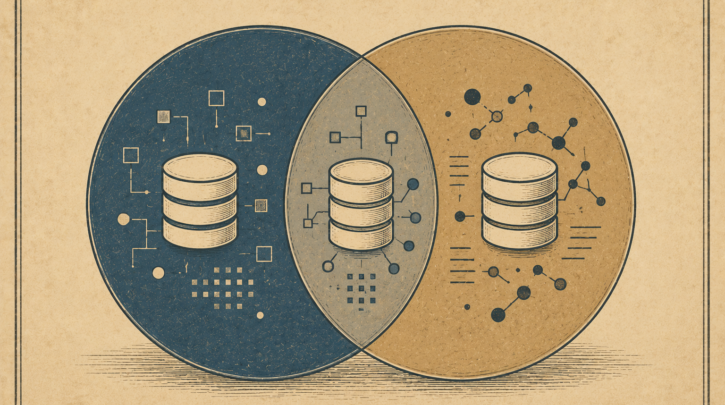
Neither platform, used alone, would have gotten her the full picture. AncestryDNA gave her volume and speed. MyHeritage gave her reach into Portugal itself and the tool she actually needed to make sense of island endogamy. Used together — one paid kit, one free upload — they cost her roughly the price of a single test.
What This Means for Your Research
If your family history looks anything like Dee’s — Azorean or Madeiran, island ancestry, a diaspora community somewhere in New England, California, or Canada — her testing pattern is a reasonable one to copy directly. Start with AncestryDNA for the database size and the diaspora density, since it will very likely surface the largest number of matches fastest, particularly if your family passed through a Portuguese-American community rather than emigrating more recently. Upload that same raw file to MyHeritage for free rather than buying a second kit, specifically for the chromosome browser — on island lines with real endogamy, that tool is doing genuine analytical work that a total centimorgan number can’t do on its own. If a specific surname line matters more to you than general cousin-finding, neither platform is actually the right tool — that’s what FamilyTreeDNA’s Y-DNA testing is built for.
And whichever platforms you use, budget for the same two years of patient, unglamorous work Dee put in. The DNA opens doors. The records are what actually walk you through them.
A Note on Privacy
Before you test with either company, spend a few minutes on the privacy settings — your genetic data is uniquely personal, and both AncestryDNA and MyHeritage let you download your raw file and delete your account, with choices about whether to participate in research uses. Read the current terms, decide what you’re comfortable with, and keep your own copy of the raw data file so you’re never locked into one company. The wider industry’s reckoning with this question, most visibly the upheaval at 23andMe, is reason enough to take the settings seriously from the start rather than after the fact. If you want a closer look at what your segment matches actually mean once you have them, the free DNA Painter Shared cM Tool is the same resource genetic genealogists use to sanity-check exactly the kind of inflated island matches Dee ran into.